Seeding Method Tempering: Portions and Stages
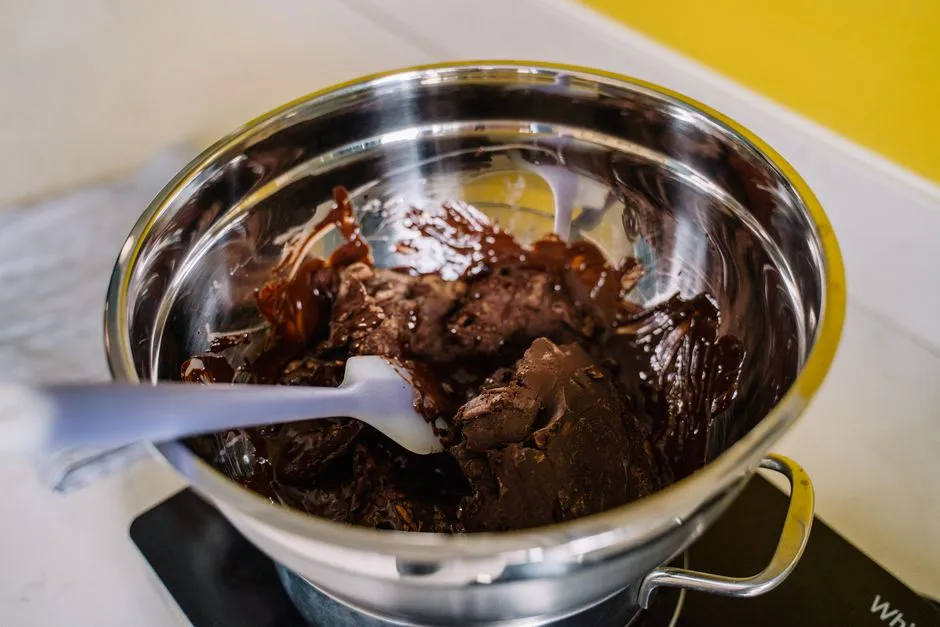
- How does the seeding method temper chocolate?
- What must the seed actually be?
- Why should you write down the method before melting?
- What does “one-third of the melted portion” mean?
- How should the bench be prepared?
- What should you watch while adding seed?
- What if solid pieces remain?
- When can you stop stirring and start using it?
- What should be recorded after the batch?
- Sources
How does the seeding method temper chocolate?
Seeding introduces already tempered solid chocolate into melted chocolate, with stirring and temperature control. Choose one complete manufacturer method for the chocolate you have; do not combine its seed quantity with another method's temperature curve. Prepare dry food-safe equipment, protect against hot bowls and steam, and check ingredient allergens. Test a small sample before using the batch. Tempering controls texture and setting; it does not make contaminated or improperly handled food acceptable.
What must the seed actually be?
Seed is chocolate that already carries the useful crystal structure you want to distribute. It is not simply any brown solid that will cool the bowl.
Callebaut's Callets tutorial identifies its tempered drops as the crystal source and explains that the amount needed depends on the temperatures of both the melted chocolate and the drops. That is why “add a handful” is an incomplete instruction.
Use plain chocolate suitable for the selected method, with known storage history and ingredient information. Do not assume bloomed leftovers, chocolate containing fillings, or compound coating supplies equivalent seed. Ask the manufacturer when suitability is unclear.
The tempering overview covers the broader choice of methods. Here, the focus is organizing the seeding batch so quantities, stages and stopping decisions stay clear.
Why should you write down the method before melting?
A method is more than its final temperature. Keep the product instructions beside the bowl, including quantities, units and sequence.
Valrhona's seeding method melts three-quarters, reserves one-third of that melt, adds the solid quarter to the main bowl, then returns the reserve. Its dark-chocolate table gives 50–55°C, 28–29°C, then 31–32°C. These are that method's stages, not universal temperatures.
What does “one-third of the melted portion” mean?
Our 600-gram planning example applies those fractions; it is not a tested batch or minimum quantity.
| Allocation | Calculation | Mass |
|---|---|---|
| Initially melted | 600 × 3/4 | 450 g |
| Solid seed | 600 × 1/4 | 150 g |
| Warm reserve from melt | 450 × 1/3 | 150 g |
| Main bowl before seeding | 450 − 150 | 300 g |
Check: 300 + 150 + 150 = 600 grams. One-third of the melted portion is 150 grams, not one-third of the original total, which would be 200 grams. Label the two reserves separately. Starting mass is not a promised finished yield after transfer losses.
How should the bench be prepared?
Use a suitable thermometer, a scale, dry mixing tools, food-contact bowls compatible with the heating method, and a clean surface for a small setting test. Follow equipment instructions, including the probe's immersion requirements.
Set aside the solid seed before applying heat. Keep it away from the hot bowl and steam. Prepare the destination mould or coating project before the chocolate reaches its working stage.
Protect hands from hot bowls and steam, use a stable setup, and supervise heating. Keep water and condensation out of the chocolate. Guittard's handling guidance specifically warns that water or steam exposure can cause seizing and thickening. This is not solved by treating the whole batch as too cold.
Do not improvise a heat gun, warming oven or other heating arrangement from a short online reference. Use equipment expressly suitable for the task and follow its manufacturer instructions.
What should you watch while adding seed?
Stir and measure the chocolate itself. A warm bowl wall or the air above the surface is not the same reading. Mix gently enough to distribute temperature without deliberately whipping in air.
Guittard's seeding guide calls for additions while stirring and monitoring both temperature and how the pieces melt. Its discussion makes observation part of the process, not an optional check after all the chocolate has been added.
Useful notes are factual:
- the measured temperature before an addition;
- the amount added under the selected method;
- whether pieces remain after stirring;
- the next temperature or test required by that method.
“Looks about right” cannot tell you which stage you reached. Neither can a single number without the product and method beside it.
For the reserved-warm-chocolate route, watch the measured result during recombination. Our control recommendation is to pause if continuing would exceed the chosen working limit, and consult the product guidance. Do not force every gram into the bowl merely to make the planning table balance. The arithmetic does not guarantee heat loss or final temperature.
What if solid pieces remain?
First check whether you have reached the method's intended stage. Small pieces during seeding are not automatically a fault. Guittard advises continued agitation for remaining small pieces while maintaining the proper working range.
Do not heat the whole bowl beyond that range just to erase one visible lump. King Arthur's block-seeding description treats a large piece differently: remove that block once the chocolate reaches temper. That is a distinct method, not a reason to discard every small piece in a chopped-seed workflow. Use clean, dry food-safe utensils; do not overheat the batch to melt a block intended for removal.
If the mixture suddenly becomes grainy or the cause is uncertain, stop and review moisture exposure, overheating and product suitability. Adding oil, water or cream creates a different formulation; it is not a standard seeding adjustment.
When can you stop stirring and start using it?
Reaching a target temperature is not the same as passing a setting check. Follow the chosen method's small-sample test before committing the whole batch.
Callebaut's under-crystallization guidance uses a dipped palette knife and a five-minute hardening checkpoint. Treat that as its stated test, not a universal deadline or proof of food safety. Record the sample result and room conditions rather than describing every slow sample as the same failure.
If the sample fails, review the product's corrective instructions and test again. Keep monitoring during use; a successful initial sample does not establish that the bowl remains unchanged throughout a long session.
What should be recorded after the batch?
Keep the preparation card with a brief outcome note:
| Record | Useful distinction |
|---|---|
| Starting and remaining quantities | Planned mass versus material actually used |
| Measured stages | Chocolate readings versus appliance settings |
| Sample result | Observed setting versus an assumed pass |
| Change made | Exact permitted adjustment versus an unexplained extra ingredient |
| Next attempt | One question to investigate rather than several simultaneous changes |
These are original recordkeeping suggestions, not a validated production-control system. For food sold or served to vulnerable groups, follow applicable professional and regulatory requirements.
Retain labels and check allergens and cross-contact for the entire finished food, not only its shell. The FDA's allergy guidance supports careful ingredient identification. Follow separate storage instructions for fillings. Find related technique guides in the chocolate technique collection.