Why Chocolate Seizes and How to Prevent It
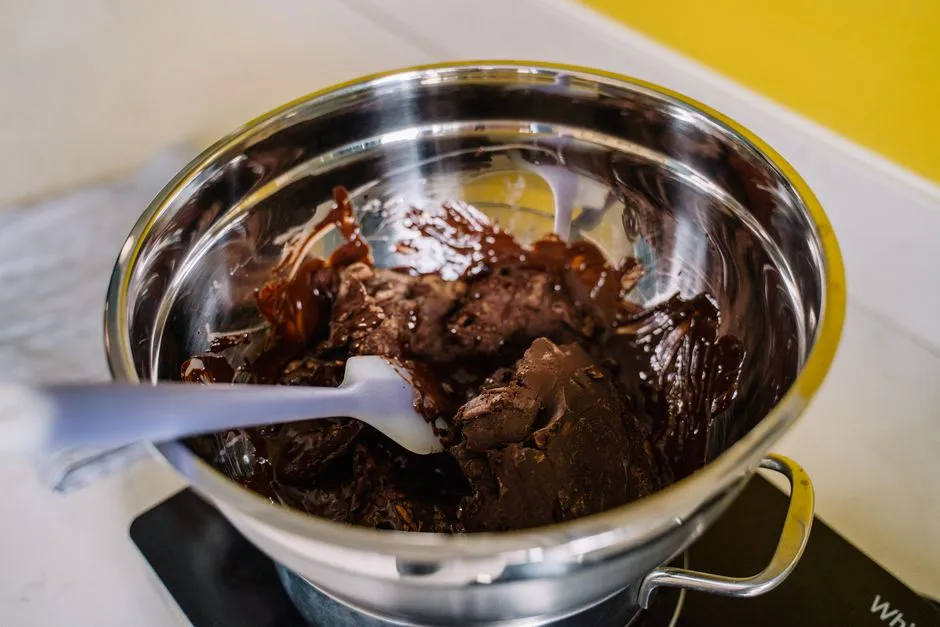
A little water can reorganize the whole bowl
Chocolate seizes when a small amount of water reaches melted chocolate and dissolves sugar on the particle surfaces. The damp sugar and dry cocoa particles clump into a thick, grainy mass instead of flowing freely in fat. Steam, a wet utensil, condensation, or a drop from a water bath can be enough to start it.
The chocolate-technique section takes that mechanism seriously. Chocolate does not hate you personally; it is merely conducting a very fast committee meeting about moisture.
Begin with completely dry equipment
Dry the bowl, spatula, knife, measuring tools, and hands before opening the chocolate. Pay attention to rims, handles, and the underside of a bowl lifted from a water bath. A towel that feels damp should not be promoted to quality control.
Chop chocolate on a dry board into similarly sized pieces so it melts evenly. Use equipment intended for food contact and suitable for the heating method. Keep packaging, labels, and allergen information until the finished food is served or stored.
If the chocolate came from a cold place, leave the sealed package to approach room temperature before opening. Moisture from the air can condense on a cold surface. The storage-and-troubleshooting section explains why sealed transitions matter beyond the mixing bowl.
Control steam during a water bath
Set a dry heat-safe bowl over gently simmering water only if the bowl and saucepan fit securely. The bowl bottom should not touch the water. Keep steam from curling around the rim, and do not let the water boil aggressively.
Stir with a dry tool and lift the bowl carefully with heat protection. Wipe the underside before placing it near the work area. Never add water to the saucepan while the chocolate bowl remains above it; splashes have excellent aim.
Follow the chocolate manufacturer's heating directions when available. Different formulations behave differently, and a generic method cannot promise the same viscosity or tempering result from every bar, chip, couverture, or compound coating.
Use gentle microwave intervals
In a microwave, heat chopped chocolate in a compatible dry bowl using short intervals and reduced power, stirring thoroughly between them. Stop while small pieces remain and let residual heat finish the melting.
Exact timing depends on microwave power, chocolate quantity, composition, bowl, and starting temperature. Long unattended heating can scorch chocolate or create hot areas before the bowl looks fully melted. Use appropriate protection when handling the bowl.
Thick chocolate is not always seized. Some chips are formulated to retain shape, some coatings are naturally viscous, and overheated chocolate can thicken. Check whether water entered and compare the behavior with the product directions before choosing a remedy.
Decide whether the project can change
Seized chocolate is not reliably restored for tempering, molding, dipping, or a thin shell. Do not keep adding heat; heat cannot remove the clumped structure and may scorch the chocolate.
If the recipe can become a sauce, ganache, glaze, or batter, it may be possible to turn the seized chocolate into an emulsion by gradually whisking in enough warm compatible liquid. Use a tested recipe for the new purpose because liquid amount, chocolate type, allergens, sweetness, storage, and food safety all change. Adding one cautious droplet at a time can simply create more clumps before enough continuous liquid exists.
When the cause or storage history is uncertain, discard according to local waste guidance rather than serving it.
Separate prevention from rescue
For the next batch, reset with clean, completely dry tools; gentler heat; ingredients prepared in advance; and better control of steam and condensation. The guide to storing chocolate without bloom covers sealed temperature transitions that also help keep surface moisture away.
The useful lesson is not that melted chocolate is temperamental. It is that chocolate is a suspension whose flow depends on keeping a small water phase from appearing accidentally. Once that is visible, prevention becomes satisfyingly ordinary: dry bowl, dry tool, controlled heat, no saucepan weather system drifting over the rim.